
Bitcoin Ordinals surpass 10 Million inscriptions on the network

TL;DR Breakdown

  • Bitcoin Ordinals have topped 10 million inscriptions after  Casey Rodarmor resigned.
  • Bitcoin supporters have criticized the practice of inscribing assets on the network as being wasteful and inefficient, particularly in terms of block space.
  • Ordinal supporters claim that BRC-20 tokens are the next big thing.

Shortly after founder Casey Rodarmor resigned as caretaker, Bitcoin Ordinals, a popular way to create assets on the blockchain, have topped 10 million inscriptions, marking a significant milestone. Over 25,000 Bitcoin-based tokens have been generated, which furthered the rise once the BRC-20 token standard was introduced.

Founder Resigns as Bitcoin’s Ordinals Project Custodian

Shortly after its founder, Casey Rodarmor, resigned as the project’s custodian, Bitcoin Ordinals reached a new milestone by surpassing 10 million inscriptions on the BTC network.

Casey Rodarmor announced on Twitter on May 28 that he was resigning as the project’s lead maintainer because he could not give Bitcoin Ordinals the attention it required. Coder Raphjaph, who uses the alias Rodarmor, was given the position.

The Ordinals protocol was launched in January and quickly became the most well-liked method of creating new assets on the Bitcoin blockchain. Ordinals, written onto individual satoshis, the smallest divisible unit of BTC, were first developed to inscribe data in the witness section of bitcoin transactions.

The introduction of the BRC-20 token standard in early March, however, really put a spike in the number of Bitcoin Ordinals inscriptions. Users could create new tokens on the Bitcoin network for the first time due to the new token standard created by developer “Domo,” who goes by only his pseudonym.
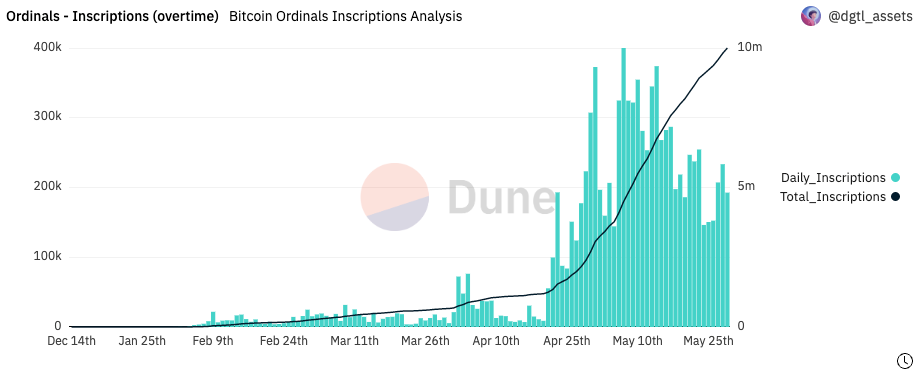
image 1065Bitcoin Ordinals surpass 10 Million inscriptions on the network

According to data from BRC-20.io, the number of Bitcoin-based tokens exploded from a few hundred in the first week to more than 25,000 at the time of publication.

Many Bitcoin supporters have criticized the practice of inscribing assets on the network as being wasteful and inefficient, particularly in terms of block space and transaction fees, as the use of Ordinals has not been disputed.

As a result, other developers are looking into using smart contracts to create Bitcoin assets and NFTs.

On the other hand, the potential of Bitcoin Ordinals to integrate new users into the larger Bitcoin community has been praised by Bitcoin proponents. Peter Schiff, a vigorous opponent of Bitcoin, recently created a limited number of NFTs on bitcoin using the Ordinals protocol.

According to statistics from Dune Analytics, the surge in network activity has benefited miners, who have now received more than $44 million in fees related to Ordinals, even if it is evident that Ordinals have played a significant role in the spike in bitcoin transaction costs.
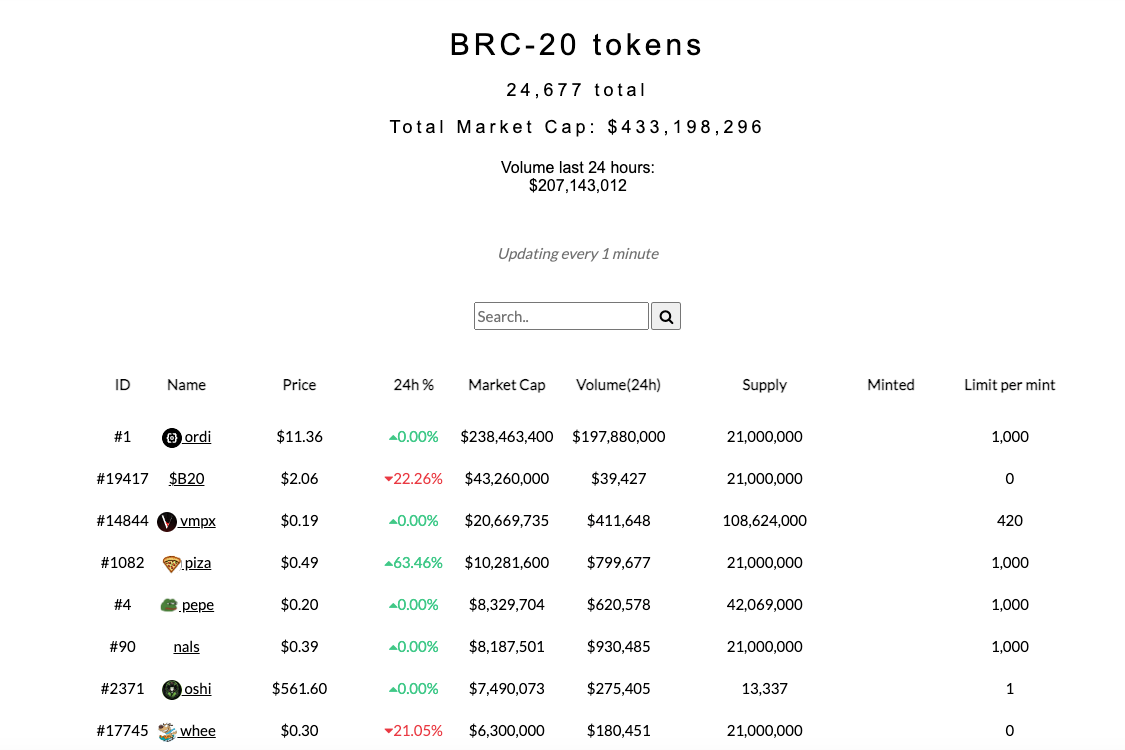
image 1066Bitcoin Ordinals surpass 10 Million inscriptions on the network

Bitcoin Ordinals market and BTC Miladys collaborate on BRC-721E Standard

The BRC-721E standard, jointly released by the Bitcoin NFT market Ordinals Market and Bitcoin Miladys, allows irreversible, verifiable ERC-721 NFTs to be transferred to Bitcoin Ordinals without embedding the complete NFT series.

The Ethereum smart contract token standard for NFTs, ERC-721 tokens, inspires BRC-721 tokens. Constructing oracles that search the Bitcoin blockchain for certain transactions will be simple, and then relaying that data to wallets or markets if there is a standard file and metadata to source from.

The BRC-721E bridges NFTs by directly encoding data into a burn transaction that designates a Bitcoin address to receive the inscription. Before BRC-721E, Teleburn required knowledge of the inscription ID before allowing the destruction of the ETH NFT. However, BRC-721E permits destruction before burning, implying that the destruction transaction serves as an inscription request on the chain and can be used by users to obtain airdrops.

Are Bitcoin ordinals the next big thing?

An ordinal is, in essence, a piece of data that has been added to the bitcoin blockchain and is referred to by a specific address that is likewise stored in the blockchain data structure.

Similar in sound to a non-fungible token (NFT), an NFT is a token that refers to actual data stored elsewhere on the internet, such as IPFS (inter-planetary file system). The problem is that if the file or its storage disappears, the NFT data is lost, leaving merely the token pointing to nothing. It may be somewhere else.

The Bored Monkeys or Punks may have long since vanished in a fog of bit rot, but Ether (ETH) may still be operating a century from now.

An ordinal is stored in a bitcoin block. Therefore the information is present as long as bitcoin BTC or its forks are active. It can only be eliminated if bitcoin and every blockchain instance are destroyed. That is virtually unimaginable.

The Bitcoin community is in a frenzy because of the Ordinals protocol. The new protocol enables arbitrary data to be inserted on the Bitcoin blockchain and has already amassed over 9,000,000 inscriptions. The fees needed to send bitcoin have significantly increased due to Ordinals, drawing attention from the NFT sector and igniting fresh discussion about how bitcoin should handle situations with high fees. 

Disclaimer. The information provided is not trading advice. Cryptopolitan.com holds no liability for any investments made based on the information provided on this page. We strongly recommend independent research and/or consultation with a qualified professional before making any investment decision.

文章来源于互联网:Bitcoin Ordinals surpass 10 Million inscriptions on the network

Disclaimers:

1. You are solely responsible for your investment decisions and this info is not liable for any losses you may incur.

2. The copyright of this article belongs to the writer, it represents the writer's opinions only, not represents the site's ones. Not financial advice.

Previous 2023年6月3日 05:43
Next 2023年6月3日 07:16

Related articles

  • Binance appoints new compliance officer amid intense regulatory scrutiny

    TL;DR Breakdown Binance introduces Kristen Hecht as the newly appointed deputy chief compliance and global money laundering reporting officer amid intense regulatory scrutiny. Hecht’s long-term objective is to establish collaborations with industry bodies, business partners, and regulators to evaluate and mitigate financial crime risk. Description Binance has appointed Kristen Hecht, the previous global head of corporate compliance at the exchange, as the newly appointed deputy chief compliance and global money laundering reporting officer. This newly created position aims to oversee compliance and anti-money laundering efforts as the company faces potential fraud allegations from U.S. regulatory authorities.  Despite recent reports of … Read more Binance has appointed Kristen Hecht, the previous global head of corporate compliance at the exchange, as the newly appointed deputy chief compliance and global money laundering reporting officer. This newly created position aims to oversee compliance and anti-money laundering efforts as the company faces potential fraud allegations from U.S. regulatory authorities.  Despite recent reports of key legal and compliance executives departing from the exchange due to the pressures of handling numerous investigations into its operations, Binance refutes…

    Article 2023年8月4日
  • Custodia CEO questions the controversy surrounding FedNow launch

    TL;DR Breakdown Custodia Bank CEO calls out controversial inclusion in the early adopter’s list. Regulatory transparency and the challenges surrounding FinTechs. Description On the same day the Federal Reserve announced the launch of its FedNow instant payment service, an intriguing revelation caught the attention of Caitlin Long, CEO of Custodia Bank. FedNow allows real-time, always-on money transfers within its interbank system, but Long noticed an unusual aspect among the list of early adopters. Adyen, an Amsterdam-based company, … Read more On the same day the Federal Reserve announced the launch of its FedNow instant payment service, an intriguing revelation caught the attention of Caitlin Long, CEO of Custodia Bank. FedNow allows real-time, always-on money transfers within its interbank system, but Long noticed an unusual aspect among the list of early adopters. Adyen, an Amsterdam-based company, was among the 35 banks and credit unions with access to the service, despite having reportedly received its federal master account in July 2020, a year before being approved to establish a U.S. branch. Custodia CEO questions the situation Long raised a crucial question on…

    Article 2023年7月23日
  • London digital fashion week: A technological renaissance in the fashion industry

    TL;DR Breakdown This year’s London Fashion Week transcended traditional norms, highlighting the blend of digital innovations like MetaHumans and the classical runway. The intersection of fashion and gaming emerges as a notable trend, with platforms like Roblox leading the way for new experiences and revenue streams. Description In a stunning meld of tradition and technology, London’s Digital Fashion Week, a landmark event in the global fashion calendar, has heralded a new era for the industry. With a digital revolution that has intertwined the rich tapestry of fashion with the dynamic world of technology, the event has painted a bold vision of the … Read more In a stunning meld of tradition and technology, London’s Digital Fashion Week, a landmark event in the global fashion calendar, has heralded a new era for the industry. With a digital revolution that has intertwined the rich tapestry of fashion with the dynamic world of technology, the event has painted a bold vision of the future. This year’s spectacle went beyond fabric and thread, venturing into the realms of digital avatars, gaming platforms, and cutting-edge…

    Article 2023年9月25日
  • Worldcoin invests over $4.8 million in blockchain education in Kenya amid controversy

    TL;DR Breakdown Tools for Humanity, a subsidiary of Worldcoin, has invested over $4.8 million in Kenya, primarily for blockchain and cryptocurrency education, through partnerships with local institutions. The investment comes amid controversies, including a temporary suspension of Worldcoin’s operations by the Kenyan government due to concerns about public safety and data privacy. CEO Alex Blania assures the company’s long-term commitment to Kenya and denies allegations that Worldcoin intends to sell users’ biometric data. Description Worldcoin’s subsidiary, Tools for Humanity, has invested more than $4.8 million in Kenya, focusing on blockchain and cryptocurrency education as well as Information and Communication Technology (ICT) awareness. Alex Blania, the CEO of Tools for Humanity, disclosed the investment details during a parliamentary inquiry into the company’s activities in Kenya. It is important to know … Read more Worldcoin’s subsidiary, Tools for Humanity, has invested more than $4.8 million in Kenya, focusing on blockchain and cryptocurrency education as well as Information and Communication Technology (ICT) awareness. Alex Blania, the CEO of Tools for Humanity, disclosed the investment details during a parliamentary inquiry into the company’s activities…

    Article 2023年9月17日
  • Texas heatwave forces Bitcoin miners to cut down on energy usage

    TL;DR Breakdown The heatwave in Texas has forced Bitcoin miners in the region to reduce usage of energy. Bitcoin mining companies are selling energy back to the grid. Description As Texas experienced a scorching heatwave, the state’s power grid faced unprecedented challenges, leading to the implementation of emergency procedures by the Electric Reliability Council of Texas (ERCOT). This extreme weather event had a significant impact on various sectors, with Bitcoin miners among those affected. Texas’ heatwave pushed several mining operations to scale down temporarily. … Read more As Texas experienced a scorching heatwave, the state’s power grid faced unprecedented challenges, leading to the implementation of emergency procedures by the Electric Reliability Council of Texas (ERCOT). This extreme weather event had a significant impact on various sectors, with Bitcoin miners among those affected. Texas’ heatwave pushed several mining operations to scale down temporarily. Companies like Riot Platforms and Marathon Digital reported adjustments in their Bitcoin production levels. Marathon Digital, for instance, saw a 9% drop in its Bitcoin production. Texas heatwave forces change in energy usage ERCOT, responsible for supplying power…

    Article 2023年9月9日
TOP