
Argentina rolls out 2,000 Peso Banknote worth $4 – Inflation at its worst

TL;DR Breakdown

  • Argentina has rolled out a 2,000 Peso banknote amid a 109% inflation rate.
  • A survey by the central bank predicts that by the end of 2023, inflation will reach nearly 130%.
  • The new 2,000-peso banknote has a design commemorating the development of science and medicine in Argentina.

Argentina’s economy is between a hard place and a rock. According to reports, Argentina introduced its largest-denomination banknote on Monday.  According to the available data, inflation is running at more than 100 percent per year, forcing the populace to carry ever-increasing amounts of cash to pay for daily expenses.

Argentina registers the worst inflation case in history

Currently, the inflation rate in the South American nation is 109 percent. This is one of the world’s highest points. A survey conducted by a central bank predicts that by the end of this year, inflation will reach nearly 130%. The interest rates have been dramatically increased to 97%.

In April, consumer prices increased at the fastest rate since 1991, when Argentina emerged from hyperinflation. The economy is anticipated to enter a recession before the presidential election later this year due to accelerating price increases and a record drought. 

Meet Argentina’s 2,000 Peso banknote

The largest denomination banknote in Argentina, the 2,000 peso bill, went into circulation on Monday (May 22). However, due to the swift depreciation of the national currency, two thousand pesos are now only worth $8.50 at the official exchange rate. In parallel markets, the price is slightly more than $4.

In comparison to the US dollar, the peso has lost roughly a quarter of its value this year alone. This occurred despite the capital controls designed to halt its decline. The majority of Argentinians purchase dollars on the black market. In these markets, the exchange rate for the dollar is 480 pesos, compared to the official rate of 235.

While the new denomination is an improvement over the 1,000 peso note, which was previously the most valuable currency in circulation, private economists and citizens who demanded banknotes of up to 10,000 pesos were disappointed. The currency’s rapid depreciation has caused logistical difficulties for customers, businesses, and banks, which have had to open new vault space to accommodate more banknotes for ATMs. 

Approximately half of all commercial transactions in Argentina are still carried out in cash. The new 2000 peso note is anticipated to alleviate some of the problems that have led to banks running out of vault space and locals and tourists carrying large amounts of cash to pay for goods.
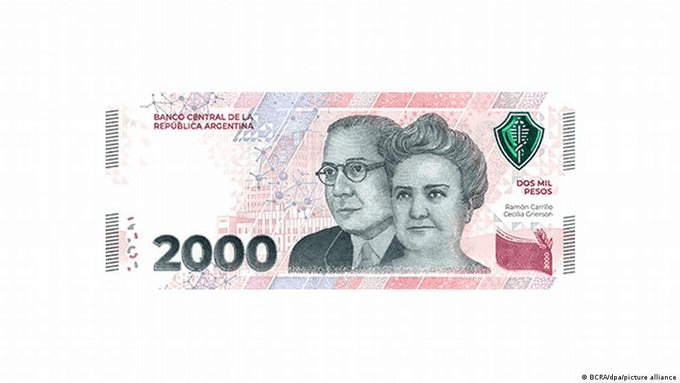
image 885Argentina rolls out 2,000 Peso Banknote worth  – Inflation at its worst

The central bank said in a Monday statement that the higher denomination bill would improve the operation of ATMs and optimize the circulation of cash. According to the central bank, the new 2,000 peso banknote features a design commemorating the development of science and medicine in Argentina.

Can crypto help Argentina fight inflation?

Here is an interesting yet sad tale of two countries in Latin America; El Salvador and Argentina. Two years back – 2021- El Salvador chose Bitcoin while Argentina pled its economic status to the IMF. In March 2022, The Argentine Senate approved a $45 billion bailout deal with the IMF to avert an imminent default on the country’s debts.

However, the agreement contained a peculiar provision. Argentina had to adopt a firm stance against cryptocurrencies. The agreement outlined Argentina’s efforts to discourage the use of crypto to prevent money laundering, informality, and disintermediation in order to further protect financial stability.

Two years later, today, El Salvador’s inflation stands at 7.2%, with a presidential approval of 90%. On the other hand, Argentina’s inflation sits at 109%, with presidential disapproval of 75%.

Despite the introduction of the 2000-peso note by the central bank, conditions for ordinary Argentinians remain difficult. Many of them are exchanging their pesos for US dollars because they view the US dollar as their only protection against inflation.  

However, Argentina has imposed restrictions on foreign currency purchases. This has stimulated the informal foreign exchange market. In addition, the drought has exacerbated economic issues. It has had a negative impact on the agricultural sector. The sector is indispensable to the nation’s ability to obtain foreign currency.

According to the central bank, Argentina has lost more than $5.5 billion in international reserves since the beginning of the year, bringing the total to $33.5 billion. Can crypto help Argentine citizens out of their financial hurdles? Probably yes. But the government stands against it.

Disclaimer. The information provided is not trading advice. Cryptopolitan.com holds no liability for any investments made based on the information provided on this page. We strongly recommend independent research and/or consultation with a qualified professional before making any investment decision.

文章来源于互联网:Argentina rolls out 2,000 Peso Banknote worth $4 – Inflation at its worst

Disclaimers:

1. You are solely responsible for your investment decisions and this info is not liable for any losses you may incur.

2. The copyright of this article belongs to the writer, it represents the writer's opinions only, not represents the site's ones. Not financial advice.

Previous 2023年5月26日 03:48
Next 2023年5月26日 04:42

Related articles

  • BIS releases contrasting reports on CBDCs and crypto

    TL;DR Breakdown The BIS has sent a comprehensive report on CBDCs and crypto to the G20 ministers where it gave a detailed analysis of both assets. The organization sees CBDCs as the future of money systems. Description In anticipation of the upcoming meeting of the G20 finance ministers and central bank governors, the Bank for International Settlements Innovation Hub (BISIH) released two significant reports on cryptocurrency and central bank digital currencies (CBDCs) on July 11. These reports present divergent perspectives on the technologies involved. BIS favors CBDCs ahead of crypto The shorter … Read more In anticipation of the upcoming meeting of the G20 finance ministers and central bank governors, the Bank for International Settlements Innovation Hub (BISIH) released two significant reports on cryptocurrency and central bank digital currencies (CBDCs) on July 11. These reports present divergent perspectives on the technologies involved. BIS favors CBDCs ahead of crypto The shorter of the two reports, spanning 24 pages, focus on the crypto ecosystem, encompassing cryptocurrencies, stablecoins, and decentralized finance (DeFi). It offers a brief overview of these components but primarily highlights…

    Article 2023年7月12日
  • ECB’s conundrum: To raise rates or not to raise rates?

    Description The corridors of the European Central Bank (ECB) have been echoing with one critical debate recently: should they hike the interest rates yet again? It’s a double-edged sword, and the pressure is palpable. A Fractured Consensus Last year, the consensus was evident. The ECB, aiming to stifle inflation, had incrementally hiked rates by 4.25 percentage … Read more The corridors of the European Central Bank (ECB) have been echoing with one critical debate recently: should they hike the interest rates yet again? It’s a double-edged sword, and the pressure is palpable. A Fractured Consensus Last year, the consensus was evident. The ECB, aiming to stifle inflation, had incrementally hiked rates by 4.25 percentage points since July 2022. But now, the very fabric of that consensus seems to be unraveling. With whispers of a looming eurozone recession becoming louder and the annual price growth now a mere shadow of its former 10.6% self, the unified direction of the bank’s trajectory seems to be on shaky grounds. Within the inner sanctum of the bank, the governors appear divided. While some are…

    Article 2023年9月13日
  • North Korea hackers swipe $70 million in cryptos

    TL;DR Breakdown North Korea is suspected of stealing $70 million in cryptos from Hong Kong-based CoinEx. Blockchain research firms, Elliptic and Chainalysis, indicate North Korea’s Lazarus Group may be responsible. The Lazarus Group has allegedly stolen approximately $240 million in recent crypto heists since June. Description A brand new heist has left the crypto world rattled, with the fingers pointed firmly at North Korea. A whopping $70 million has vanished from the vaults of CoinEx, a crypto exchange that operates out of Hong Kong. The audacious cyber-theft is yet another sign of the shifting sands in global finance. Digital currency, once … Read more A brand new heist has left the crypto world rattled, with the fingers pointed firmly at North Korea. A whopping $70 million has vanished from the vaults of CoinEx, a crypto exchange that operates out of Hong Kong. The audacious cyber-theft is yet another sign of the shifting sands in global finance. Digital currency, once hailed as the future of money, now finds itself under siege from the rogue nation’s state-sponsored hackers. The Trail of Suspicion…

    Article 2023年9月17日
  • Is PayPal’s PYUSD the future of crypto or a threat to decentralization?

    TL;DR Breakdown PayPal’s PYUSD stablecoin launch marks a milestone for Ethereum but raises concerns over transaction costs. PYUSD’s introduction sparks fears over similarities to centralized digital currencies. The crypto community’s response to PYUSD is mixed, with both optimism for broader adoption and skepticism over potential centralization. Description PayPal recently concluded a two-year exploratory period, culminating in the launch of its newly established stablecoin, PayPal USD (PYUSD), on August 7, issued by Paxos Trust Co. Tailored for digital transactions and Web3 applications, PYUSD functions on the Ethereum platform and is poised to make significant impacts on Ethereum’s mainstream acceptance. The stablecoin’s functionalities, such … Read more PayPal recently concluded a two-year exploratory period, culminating in the launch of its newly established stablecoin, PayPal USD (PYUSD), on August 7, issued by Paxos Trust Co. Tailored for digital transactions and Web3 applications, PYUSD functions on the Ethereum platform and is poised to make significant impacts on Ethereum’s mainstream acceptance. The stablecoin’s functionalities, such as purchasing, vending, retaining, and transferring, although reminiscent of a conventional checking account or an existing PayPal account, signal a…

    Article 2023年8月9日
  • Tether’s grip on crypto market eroded by harsh competition

    TL;DR Breakdown Tether’s dominance in the cryptocurrency market is waning. Tether’s market cap dropped by 1.2% in August but still remains three times larger than its nearest competitor. The overall stablecoin market has been contracting for 17 consecutive months. Regulatory challenges and reduced DeFi activity contribute to the decline. Description Tether’s once undisputed dominance in the cryptocurrency landscape is being tested. The stablecoin giant, which has long been the cornerstone of the digital-asset market, is seeing its influence wane as challengers step up their game and the industry grapples with regulatory scrutiny and waning investor interest. Tether’s Luster Dims in Stablecoin Wars In the rapidly-evolving … Read more Tether’s once undisputed dominance in the cryptocurrency landscape is being tested. The stablecoin giant, which has long been the cornerstone of the digital-asset market, is seeing its influence wane as challengers step up their game and the industry grapples with regulatory scrutiny and waning investor interest. Tether’s Luster Dims in Stablecoin Wars In the rapidly-evolving world of cryptocurrencies, a decrease in Tether’s market capitalization is a glaring indicator of its diminishing power….

    Article 2023年9月4日
TOP